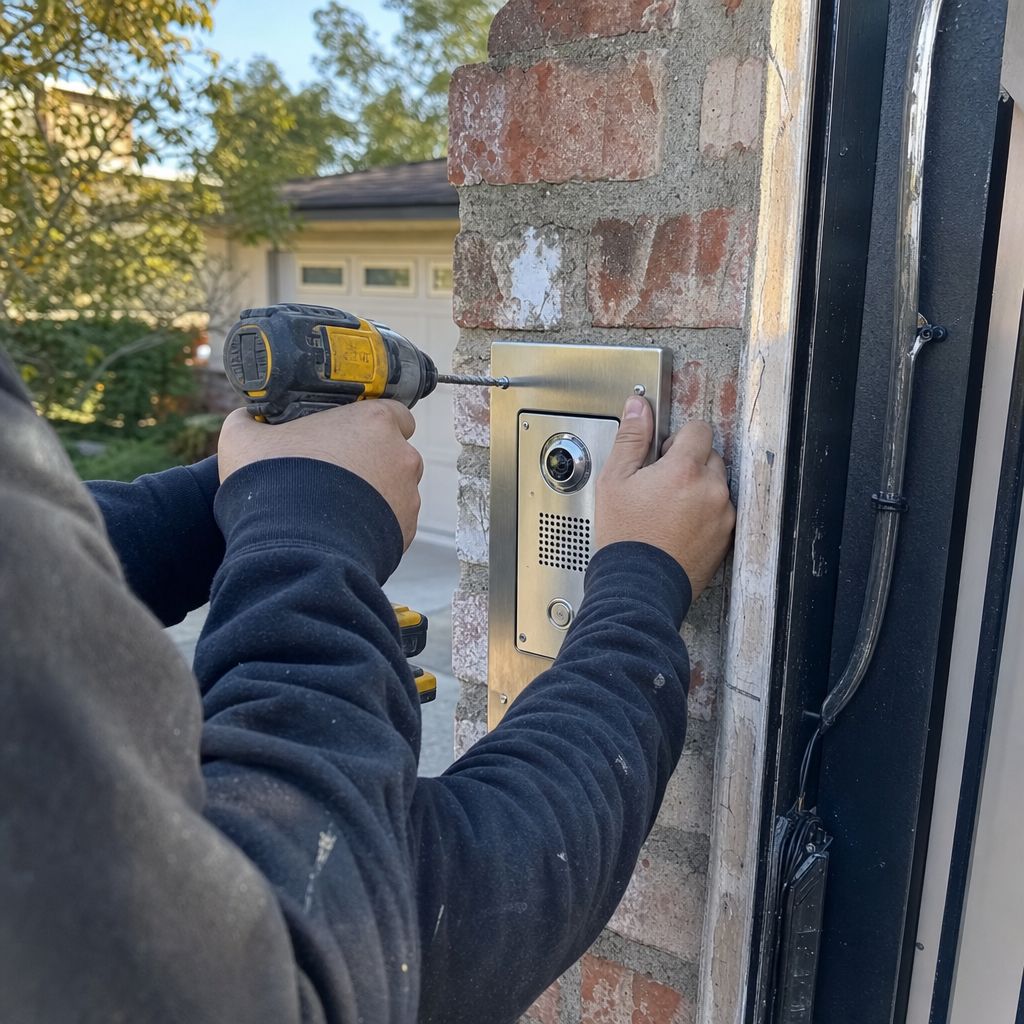
How Gate Access Control Systems Work in Ancho Cordova, CA
Gate access control systems in Ancho Cordova typically work by using a reader to verify a credential (like a keypad code, remote fob, or smartphone app), which signals a controller board to send a command to the gate motor to open or close. Often, the root cause of a malfunctioning system isn’t the keypad or app, but a small, often overlooked component like the controller’s output relay – a detail Eric King, Owner & Lead Technician at Ampm Gate Repair Services Ancho Cordova, has seen cause about 60% of service calls for non-responsive gates in the Sacramento area. We’re experts in the technology behind systems from brands like LiftMaster, FAAC, and Elite, and we’re here to break down precisely how they function to keep your property secure and accessible.
Rancho Cordova’s diverse housing stock, from newer master-planned communities to older neighborhoods developed in the 1980s and 90s, means we encounter a wide range of gate access control technologies. Older, wired keypad systems might struggle to integrate with modern smartphone-based entry, often requiring a controller board upgrade to bridge the gap. Understanding the distinct layers of your gate’s access control is key to diagnosing issues efficiently and avoiding unnecessary expenses. A gate that doesn’t work right isn’t a gate — it’s just an expensive inconvenience. Let’s fix it properly the first time.
The Four Layers of Gate Access Control
At its core, gate access control is a communication chain. When you try to enter your property in Ancho Cordova, your request travels through a series of components before the gate operator swings open. This system is typically built in four interconnected layers:
- Credential Input Device: This is what you interact with first. It can be a physical keypad for entering a PIN, a card reader for fobs, an intercom system for visitors, or even a smartphone app using Bluetooth or Wi-Fi. Its job is to read your authorized entry method.
- Controller Board: This is the “brain” of the system. Once the input device reads your credential, it sends that information to the controller. The controller then checks if your credential is valid against its programmed list of authorized users.
- Output Relay: If the controller board verifies your credential, it activates an output relay. Think of this as a switch. This relay completes a circuit, sending a low-voltage signal to the gate operator. Many service calls Eric King handles in Ancho Cordova trace back to a faulty relay, which is a relatively inexpensive part to replace but can cause complete system failure if ignored.
- Gate Operator (Motor): This is the heavy-duty motor and gearbox that physically moves the gate. It receives the signal from the output relay and executes the command: open, close, or stop.
Because Eric King has nearly two decades of hands-on experience and is factory-familiar with 9 major gate brands, he can often diagnose issues by looking at the controller board’s diagnostic LED blink codes. This specific knowledge means we can pinpoint failures accurately on brands like Elite or Mighty Mule, avoiding the guesswork that leads to misdiagnoses and higher costs.
Understanding Brand-Specific Handshakes
While the four-layer model is universal, how each brand’s controller board communicates with the gate operator can differ slightly. For example, LiftMaster systems often use specific wiring configurations for their relays compared to FAAC or DoorKing. This “handshake” protocol is why it’s crucial to work with a specialist who understands these nuances. A technician unfamiliar with a specific brand might replace an entire motor when the issue is simply a misconfigured relay connection specific to that manufacturer.
We’ve seen firsthand how the local environment in Ancho Cordova can impact gate systems. For instance, our mild winters and hot, dry summers don’t typically cause the same kind of corrosion as coastal climates, but dust and debris can still infiltrate key components over time, especially in older installations. This is why regular maintenance, including cleaning and checking these connections, is so important for longevity.
How Different Credentials Work
The type of credential you use also plays a role in how the system functions and what upgrades are possible. Here’s a quick look at the hierarchy and common types:
- PIN Codes (Keypads): Basic and common, these rely on the user remembering and correctly entering a numerical sequence. The controller board verifies the entered code against its stored list.
- RFID Fobs/Cards: These use radio frequency identification to transmit a unique code to a reader. They’re convenient and can be programmed with varying access levels.
- Vehicle Loop Detectors: Buried in the pavement, these detect the metal mass of a vehicle. They’re essential for community gates that need to open automatically as a resident approaches, preventing the need for manual credential use in a car. Adding a loop detector is often the single most reliability-boosting upgrade for a busy community gate.
- Smartphone Apps/Bluetooth: Modern systems leverage your phone as a credential via Bluetooth or Wi-Fi. These offer advanced features like remote access management and temporary guest codes.
When a system fails, understanding which credential type isn’t working can help narrow down the problem. If only keypad codes are failing, the issue is likely with the keypad or controller. If fobs also fail, it might point to the controller or relay. Eric King’s 19 years of experience means he can quickly assess these symptoms and diagnose the exact point of failure, saving you time and money.
FAQs
The cost to install a gate access control system in Ancho Cordova can range from $400 for a basic keypad and controller setup to $1,500 or more for advanced systems with intercoms, multiple card readers, and smartphone integration. We provide free estimates to give you an exact price for your specific needs.
The most common failure Eric King sees in Ancho Cordova is a faulty output relay on the controller board, which prevents the signal from reaching the gate motor, rather than an issue with the keypad or app itself. This is often a $15 part that can be replaced by a trained technician, saving the cost of a full system replacement.
Yes, many modern gate access control systems in Ancho Cordova allow you to use your smartphone as a credential via Bluetooth or a dedicated app, offering convenience and advanced features for managing access.
A gate opener (or operator) is the motor that physically moves the gate, while access control refers to the system that determines *who* is authorized to operate that opener, using devices like keypads, fobs, or intercoms.
If you’re experiencing issues with your gate access control system in Ancho Cordova, or if you’re considering an upgrade for better security and convenience, Ampm Gate Repair Services Ancho Cordova offers expert diagnostics and installation. We’re dedicated to providing clear explanations and reliable solutions. Call us today at (279) 256-1348 for a no-pressure assessment and free estimate.
Written by Eric King, Owner & Lead Technician at Ampm Gate Repair Services Ancho Cordova, serving Ancho Cordova, CA.